



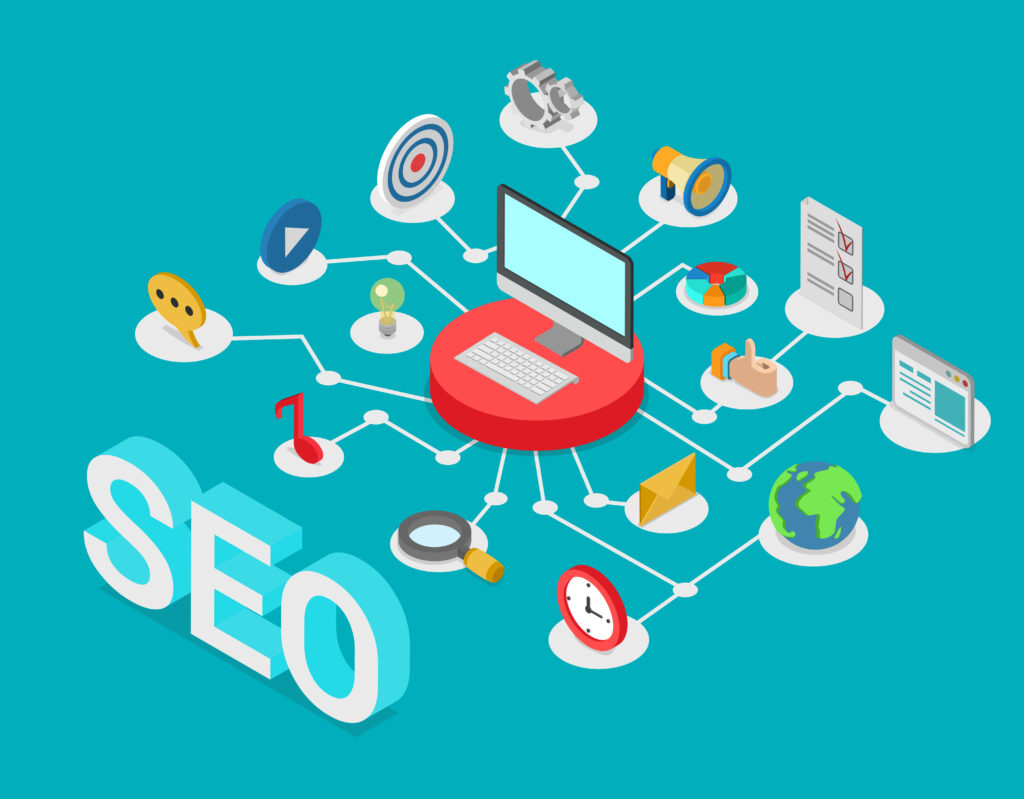
When people say “do SEO,” they mean several disciplines working together. Missing one type of SEO means missing a core part of the process. Many site owners never learn the types of SEO and wonder why results stay flat. I walk every new client through the types of SEO before any work starts.
The goal stays simple. Cover every SEO category, not just the obvious ones. This guide breaks down each type of SEO, including on-page, off-page, technical, and local SEO. You will learn what each category covers and which one your site needs most right now.
Good to know: Most sites that fail to rank are missing at least one type of SEO. Technical issues block all other efforts. Missing local SEO leaves local businesses invisible. Skipping off-page SEO caps how competitive your rankings can become. Every category works together. None is optional.
On-Page SEO
On-page SEO covers everything you do within your own pages to help search engines understand them.
Key on-page SEO elements:
- Title tags: the clickable headline in Google results, the most important on-page element
- Meta descriptions: control your click-through rate from search results
- Heading structure: the H1, H2, H3 hierarchy that organizes content for Google and readers
- Content quality: depth, relevance, keyword usage, and match to user intent
- Image optimization: file names, alt text, compression, and format
- Internal linking: connects pages and spreads authority across your site
- URL structure: clean, keyword-relevant slugs
- Schema markup: structured data that enables rich results
Start here first. Without solid on-page work, other types of SEO reach only a fraction of their potential.
Off-Page SEO
Off-page SEO covers signals that happen outside your website but still shape your rankings. Backlinks sit at the core of this SEO category.
Key off-page signals:
- Backlinks: links from other sites that Google treats as votes of confidence
- Domain authority: your site’s overall link-based authority built over time
- Brand mentions: unlinked references to your brand that signal awareness
- Social signals: shares that increase visibility and can lead to natural links
- Digital PR: earned media coverage that generates editorial backlinks
Link quality matters far more than link quantity. One strong link beats a hundred weak ones. Niche relevance matters more than raw count.
Technical SEO
Technical SEO makes sure Google can crawl, index, and understand your website. If technical problems block Google from reaching your content, every other SEO type gets wasted.
Core technical SEO areas:
- Crawlability: can Googlebot reach and navigate your important pages
- Indexing: are your pages stored in Google’s index
- Site speed: load time affects rankings and user experience alike
- Mobile-friendliness: critical since Google uses mobile-first indexing
- Core Web Vitals: LCP, INP, and CLS user experience metrics
- HTTPS: SSL security counts as a confirmed ranking signal
- XML sitemap: helps Google discover and prioritize your pages
- Robots.txt: controls which pages Google can crawl
- Structured data: enables rich results in search
Local SEO
Local SEO helps businesses show up in location-based searches. Any business serving a specific area needs this SEO category.
Key local SEO components:
- Google Business Profile: the most important local SEO asset for any business
- NAP consistency: identical name, address, and phone across every directory
- Local citations: listings on directories like Yelp and industry-specific platforms
- Customer reviews: volume, recency, and response rate all affect local rankings
- Local keyword targeting: pairing your service with your city or neighborhood
- Location pages: dedicated pages for each city or service area you cover
Local SEO drives foot traffic, calls, and bookings. Among all types of SEO, it delivers the highest return for local businesses.
E-commerce SEO
E-commerce SEO focuses on ranking product and category pages. Among the types of SEO, it brings challenges that standard site SEO does not face.
E-commerce SEO challenges:
- Large-scale duplicate content from product variants like color and size
- Faceted navigation that creates thousands of URL combinations
- Out-of-stock product pages that need careful handling
- Thin product descriptions, especially copy pulled from manufacturers
- Crawl budget management for very large stores
E-commerce SEO priorities:
- Unique, detailed product descriptions that match search intent
- Product schema for rich results with prices and ratings
- Category page content that reads as original, not filler
- Internal links between related products and categories
- Canonical tags that manage duplicate content from filters and sorting
International SEO
International SEO helps sites rank across multiple countries and languages. Among the types of SEO, this one matters most for brands expanding into new markets.
Key international SEO elements:
- Hreflang tags: tell Google which version to show in each country
- URL structure: country subdomains, subdirectories, or ccTLDs for each region
- Local content: genuine localization for each market, not plain translation
- Canonical management: stops different country versions from competing with each other
- Server location or CDN: keeps content fast for users in each region
Voice Search SEO
Voice search through smart speakers and phone assistants covers a growing share of queries. This SEO type needs a different approach than typed search.
Voice search optimization:
- Target conversational, question-based keywords, such as “how do I” phrasing
- Aim for featured snippets, since voice assistants pull most answers from these
- Focus on local information, since “near me” queries stay heavily voice-driven
- Keep your site fast, since voice results favor quick, trusted pages
- Add FAQ sections with short, clear answers that assistants can read aloud
How All Types of SEO Work Together
Picture these SEO categories as one system, not separate strategies:
- Technical SEO builds the foundation, since nothing else works without it
- On-page SEO tells Google what each page covers
- Off-page SEO tells Google how much to trust your pages
- Local SEO connects your business to nearby searches
- E-commerce SEO applies focused tactics to transactional pages
- Voice and international SEO extend your reach to new audiences
These types of SEO depend on each other for real results. Skipping any one leaves a weak spot that limits your ranking ceiling. A technically strong site with no backlinks still hits a wall. A site with strong backlinks but weak technical SEO wastes that authority. Google cannot even read the pages it points to.
Frequently Asked Questions
Which type of SEO matters most?
Every SEO category plays a role. Technical SEO forms the foundation the rest depend on. If Google cannot crawl and index your site, content and backlinks will not help. After the technical base, on-page and off-page SEO usually drive the biggest gains.
What is SEO and its types?
SEO stands for search engine optimization. It means improving how a site ranks in search results. The main types of SEO are on-page, off-page, technical, and local SEO. Specialized categories include e-commerce and international SEO.
Do I need every SEO category?
Most sites benefit from on-page, off-page, and technical SEO at minimum. Local businesses should add local SEO. Online stores need e-commerce tactics. Global brands add hreflang and regional targeting. Start with what fits your business now.
What is the easiest SEO category to learn first?
On-page SEO suits beginners best. Title tags, meta descriptions, and heading structure need only free tools. A solid grasp of the basics gets you started. Start here, then expand into technical and off-page SEO as your confidence grows.
Can I skip off-page SEO and still rank?
For very low competition keywords, yes. For moderate or competitive terms, off-page signals usually help you outrank set competitors. The tougher your target keywords, the more backlinks and domain authority shape your ranking ceiling.
What are the different types of search queries in SEO?
Search queries fall into four main groups. Informational queries seek an answer, like “what is SEO.” Navigational queries look for a specific site or brand. Transactional queries signal buying intent, like “buy running shoes.” Commercial investigation queries compare options before a purchase. Matching content to the right query type helps you target the right SEO category for each page.
Written by Iqra
SEO Expert & Content Strategist | seobyiqra.com
Iqra is an SEO specialist who has ranked websites in competitive niches, including legal, healthcare, dental, and e-commerce. She writes from real campaign results, not textbook theory. Every strategy she shares has been tested on live sites with measurable outcomes.