


A client once got a big jump in traffic but zero new sales. That is exactly what an SEO funnel is built to fix. Traffic alone does not pay the bills, but the right SEO funnel turns visits into real customers.
Many people search for what the seo funnel and stop there, but knowing the stages of the SEO funnel is where the real value sits. This guide walks through every stage of the SEO funnel, from a first search to a final decision, and shows how to build an SEO strategy funnel that brings in leads instead of just clicks.
What Is the SEO Funnel?
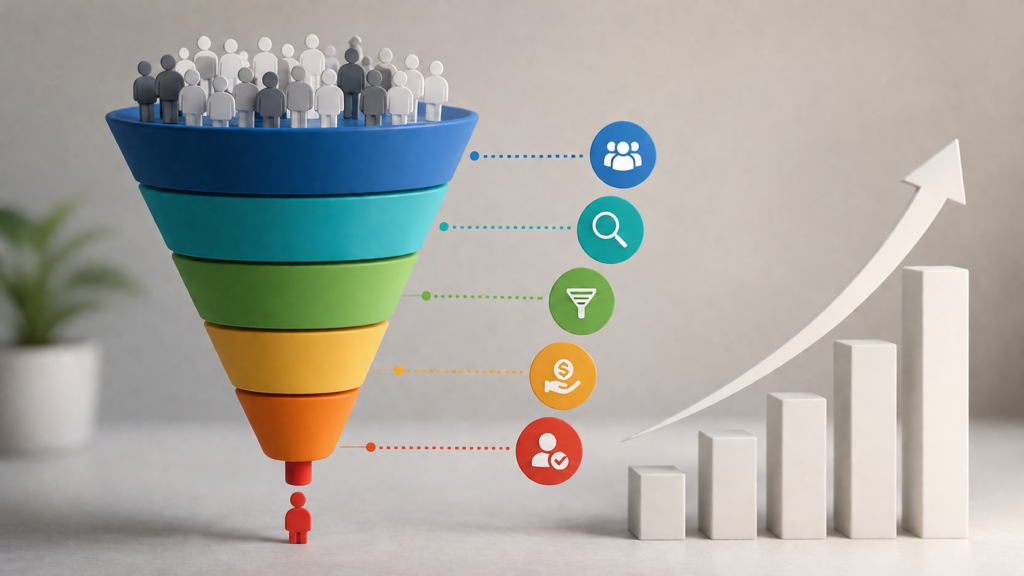
It is the path a person takes online, from the moment they notice a problem to the moment they pick a solution. Some people search for funnel in seo; others type what is funnel in seo, but they are asking about the same thing. Every SEO funnel has stages, and each stage needs its own content and its own keywords.
Most sites lean hard on big, broad keywords because they bring in more searches. That leaves the smaller, more specific keywords open, and those are usually the ones that bring in buyers, not just visitors.
Top of Funnel Content for Awareness
Top of funnel content is built for people who are just finding out they have a problem. This is where seo strategies for top of funnel awareness really matter, since this content earns trust before anyone is ready to buy.
Examples of top of funnel content:
- Simple blog posts that explain a problem
- Beginner guides written in plain language
- Trend and stat posts that build awareness
Middle of Funnel Content for Consideration
Middle of funnel content is for people comparing their options. This part of the funnel usually includes comparison posts, deep guides, and real examples that show proof instead of promises.
Bottom of Funnel Content for Decisions
Bottom of funnel content targets people who are ready to choose. This stage is where an SEO sales funnel and an SEO conversion funnel earn their names, since this content converts far more often, even with less search volume behind it.
Examples of bottom of funnel content:
- Service or product pages with clear pricing
- Pages that compare you against competitors
- Local pages built for one city or area
Why Funnel Stage Matters More Than Volume Alone
A small keyword with strong buying intent can bring in more sales than a big keyword that never turns into a customer. This is the whole point behind a working SEO sales funnel: volume gets you seen, but intent gets you paid. Even a niche question like at what stage of the funnel does seo sem sit shows people are thinking hard about where SEO and paid ads meet, and that kind of intent is worth targeting.
Mapping Your Existing Content to the Funnel
Go through your old posts and mark each one by funnel stage. Most sites end up with a pile of top-of-funnel posts and almost nothing at the bottom, which is usually why traffic keeps growing while sales stay flat.
Ask yourself:
- Does this page cover awareness, comparison, or a final decision?
- What should someone do right after reading it?
- Does the internal linking send readers to the next stage?
Connecting Funnel Stages With Internal Links
Use internal links to guide readers from top of funnel posts toward the middle and bottom pages. This is also how seo funnels build customer relationships in practice, since every link gives someone a reason to stay and keep reading instead of leaving after one page.
How to Build a Balanced SEO Strategy Funnel
A solid seo funnel strategy spreads content across all three stages instead of putting everything into big, broad topics. A balanced SEO funnel converts better over time than a strategy that only chases awareness and never asks for the sale.
If you are still working out your first funnel seo plan, start small. Pick one product or service, write one piece for each stage, then link them together before moving to the next topic. This same approach works whether you call it a marketing funnel seo plan, a plain seo marketing funnel, or seo strategies for marketing funnel stages, the stages stay the same either way.
Frequently Asked Questions
What is the SEO funnel?
It is the journey someone takes from finding your site in a search to becoming a paying customer. It covers every stage of the seo funnel, from the first click to the final decision.
What are the stages of the SEO funnel?
Most seo funnel stages break down into three parts, awareness at the top, consideration in the middle, and decision at the bottom. Some marketers add a fourth stage for loyalty after the sale.
Why does my site get traffic but few conversions?
This usually happens when most of your content targets top of funnel awareness keywords without enough bottom of funnel content to guide readers toward an actual decision.
Should I prioritize top or bottom of funnel content first?
Most experienced marketers recommend starting with bottom of funnel content first since it converts faster, then building awareness content later to feed that conversion layer over time.
Is an SEO funnel the same as a sales funnel?
Not quite. A sales funnel for seo focuses only on organic search and keywords, while a full sales funnel covers every channel, including ads, email, and social media.
What is a search funnel?
A search funnel is another name some marketers use for the SEO funnel. It tracks all the searches someone makes before they finally convert.
How does a keyword funnel work?
A keyword funnel groups your keywords by stage, awareness keywords at the top, comparison keywords in the middle, and buying keywords at the bottom. This makes it easier to spot gaps in your seo for each stage of marketing funnel.
Written by Iqra
SEO Expert and Content Strategist | seobyiqra.com
Iqra is an SEO specialist who has ranked websites in competitive niches, including legal, healthcare, dental, and e-commerce. She writes from real campaign results, not textbook theory. Every strategy she shares has been tested on live websites with measurable outcomes.